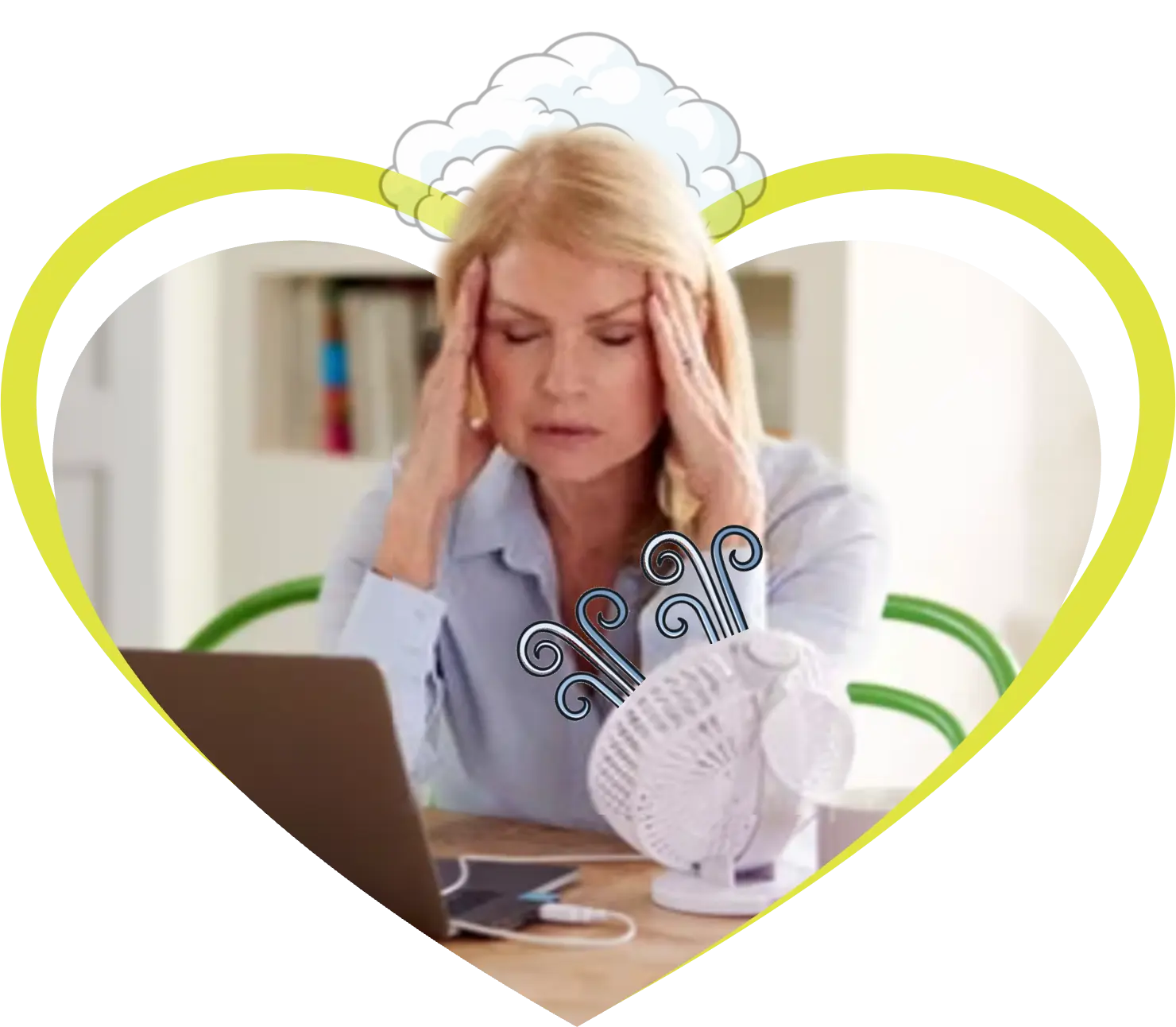
Drenched in sweat at 3:00 am? Find yourself snapping over nothing? Are you forgetting words or thoughts mid sentence? Is your weight increasing while your energy is always on empty? You’re not alone. Millions of women suffer silently with these symptoms every day without answers. Let’s talk menopause in part 1 of our series. Plus, in our ‘People Also Asked’ section below, see what other women are asking or submit your own question. Let’s get started.

Key Takeaways?
- This is Part 1 of our 2 Part Menopause Series.
- Perimenopause often causes more severe symptoms than menopause
- Hot flashes affect 75% of women and result from estrogen’s effect on brain temperature regulation
- Bone density loss accelerates rapidly after menopause, increasing fracture risk by up to 20%
- Hormone replacement therapy reduces hot flashes by 75% and protects bone health
- Need menopause relief now? Download our E-Book or view our treatment Offers
What Is Menopause?
Menopause marks the end of your menstrual cycles. It’s officially diagnosed after you’ve gone 12 consecutive months without a period. Most women experience menopause between ages 45 and 55, with the average age being 51 in the United States.
But here’s what many women don’t realize, the transition doesn’t happen overnight. Perimenopause, the phase leading up to menopause, can start years earlier. During this time, your ovaries gradually produce less estrogen and progesterone. Your periods become irregular. Symptoms start appearing.
Some women breeze through this transition with minimal issues. Others struggle with debilitating symptoms that affect their work, relationships, and quality of life. The difference? Often, it’s whether they receive proper menopause treatment and support.
What Is Perimenopause?
Believe it or not, perimenopause is often more challenging than menopause itself. This phase typically starts 4-8 years before your periods stop completely, though it can last a decade or longer for some women.
During perimenopause, your hormones don’t decline steadily. They surge and plummet unpredictably, like a rollercoaster you didn’t buy a ticket for. One month your estrogen spikes and you feel relatively normal. The next month it crashes and you’re soaked in sweat at 2 AM wondering what’s happening to your body.
Your periods become irregular during this time. They might be longer or shorter, heavier or lighter, or you might skip months entirely. Many women in their early-to-mid 40s assume they’re too young for menopause when these changes start. Wrong. Perimenopause can begin as early as your late 30s.
The difference between perimenopause and menopause matters for treatment. Fluctuating hormones require different management strategies than the stable hormone deficiency that follows menopause. This is why tracking your symptoms and cycle patterns helps your provider choose the right approach for where you are in this transition.
What Are the Symptoms of Menopause?
| Aspect | Details |
|---|---|
| What it is | End of menstrual cycles after 12 consecutive months without a period |
| Typical age range | 45-55 years old, average age 51 in United States |
| When symptoms start | Perimenopause begins 4-8 years before final period, sometimes earlier |
| Common symptoms | Hot flashes (75%), mood changes, brain fog, vaginal dryness, weight gain |
| Health risks | 20% bone density loss in 5-7 years, increased heart disease risk |
| Treatment options | Hormone replacement therapy, non-hormone medications, lifestyle changes |
Physical Symptoms
About 75% of women experience hot flashes and night sweats. These aren’t just feeling warm. They’re sudden waves of intense heat that spread through your chest, neck, and face. Your heart races. You break out in sweat. The episode lasts anywhere from 30 seconds to 5 minutes, then you’re left feeling chilled and exhausted.
Why do hot flashes happen? When estrogen levels drop, your hypothalamus gets confused. This is your brain’s temperature control center, and it suddenly thinks you’re overheating when you’re not.
So it triggers sweating and blood vessel dilation to cool you down. Multiple times a day. Multiple times a night. It disrupts sleep, affects work performance, and makes you feel like you’re losing control of your own body.
Vaginal changes are just as common but less discussed. The tissue in your vaginal walls becomes thinner, drier, and less elastic. This increased dryness can also make you more susceptible to vaginal infections. This is called vaginal atrophy, and it makes sex painful for many women. Some women also develop urinary symptoms like urgency, frequency, stress incontinence, or recurrent UTIs because the tissues in your bladder and urethra are affected by the same estrogen decline.
Weight gain sneaks up gradually, especially around your midsection. You haven’t changed your diet or exercise routine, but suddenly you’re carrying an extra 10-20 pounds you can’t explain. Joint pain and muscle aches become more common. Your skin gets drier and loses elasticity. Hair thins on your head while unwanted facial hair appears. Some women notice breast tenderness or changes in breast size.
The physical symptoms pile up, no? And they’re not subtle.
Mental and Emotional Symptoms
Brain fog is real, not imaginary. Research shows that declining estrogen causes actual neurological changes affecting memory and concentration. You walk into a room and forget why. You can’t find the word you need mid-sentence. You struggle to focus on tasks that used to be easy.
Mood swings, irritability, anxiety, and depression often intensify during this transition. Sleep disturbances compound everything else. You have trouble falling asleep, wake frequently during the night, or find yourself wide awake at 4 AM. When you’re sleep-deprived, every other symptom feels worse.
Many women also experience reduced libido and sexual interest. Some of this is physical, vaginal dryness makes sex uncomfortable. But hormonal changes directly affect your sex drive too. Fatigue and low energy become your new normal. These symptoms feed into each other in a frustrating cycle that affects every area of your life.
Here’s what we see in our practice: women who think they’re losing their minds when really, it’s just menopause. That’s not meant to minimize it. It’s just suffering. But it’s treatable suffering.
What Causes Menopause Symptoms?
Your ovaries produce less estrogen and progesterone as you age. Eventually, they stop producing these hormones almost entirely. So what? Well, estrogen receptors exist throughout your entire body, not just your reproductive system.
Your brain has estrogen receptors. So do your bones, skin, heart, vaginal tissue, and bladder. When estrogen levels drop, all these systems react. That’s why menopause affects so much more than your periods stopping.
The hypothalamus controls temperature regulation. The vaginal walls need estrogen to stay thick and moist. Bones require estrogen to maintain density. Your cardiovascular system relies on estrogen for blood vessel flexibility and healthy cholesterol levels. This isn’t just about reproduction. It’s a whole-body transition.
Genetics play a significant role in how severe your symptoms are and when they start. If your mother had a rough menopause, you’re more likely to as well. Surgical menopause, which happens when your ovaries are removed, causes immediate and often more severe symptoms because there’s no gradual transition period.
What Health Concerns Increase After Menopause?
Bone Health
Bone density loss accelerates rapidly after menopause. Before menopause, estrogen protected your bones by helping them absorb calcium and maintain their structure. Without estrogen, bone breakdown outpaces bone building.
The numbers are stark. Women can lose up to 20% of their bone density in the first 5-7 years after menopause. This leads to osteoporosis, a condition where bones become porous and fragile. Hip fractures, spine fractures, and wrist fractures become much more common. A hip fracture after age 65 significantly increases your risk of long-term disability and early death.
Prevention starts now. Weight-bearing exercise like walking, jogging, or strength training stimulates bone formation. You need 1,200mg of calcium daily and 800-1,000 IU of vitamin D to support bone health. Bone density screening with a DEXA scan typically starts at age 65, though women with risk factors should be screened earlier.
Heart Health
Heart disease risk increases significantly after menopause, becoming the leading cause of death in postmenopausal women. Estrogen had a protective effect on your blood vessels and cholesterol levels. Without it, your cardiovascular risk profile changes dramatically.
LDL cholesterol, the bad kind, tends to rise while HDL cholesterol, the good kind, drops. Blood pressure often increases. You’re more likely to develop atherosclerosis, where plaque builds up in your arteries. The transition through menopause is actually a critical window for cardiovascular health screening and prevention.
Mirianellys Roque, APRN, CNM, MSCP
• Women’s Health Clinician
• 20+ years in OB/GYN Field
Regular checkups become essential. Your provider should monitor your blood pressure, cholesterol levels, and overall cardiovascular risk factors. Lifestyle changes like exercise, healthy eating, and stress management matter more than ever for heart health.
Other Health Risks
Abdominal fat accumulation isn’t just cosmetic. It raises your risk of metabolic syndrome, a cluster of conditions that increase heart disease and diabetes risk. Type 2 diabetes becomes more common after menopause, partly due to hormonal changes affecting how your body processes insulin.
Some research suggests cognitive changes and potential increased dementia risk, though this area is still being studied. Urinary tract changes make you more susceptible to infections. These aren’t just inconveniences. They’re legitimate health concerns that deserve attention and management.
How Is Menopause Diagnosed?
Most of the time, menopause is diagnosed during your well-woman exam based on your symptoms, age, and menstrual history. If you’re over 45, haven’t had a period for 12 consecutive months, and you’re experiencing typical menopause symptoms, that’s menopause. No blood test required.
Blood tests measuring FSH and estradiol can help in unclear cases. FSH, or follicle-stimulating hormone, rises as your ovaries produce less estrogen, trying to stimulate them to work harder. Estradiol, the main estrogen, drops. But here’s the problem, during perimenopause, these hormones fluctuate wildly from day to day and week to week.
You could test “normal” one day and get a completely different result the next week. A normal blood test result doesn’t rule out perimenopause if your symptoms and cycle changes suggest it. We see women in our practice who were told they’re “too young” or their “hormones are fine” based on a single blood test, when clearly something is happening.
The diagnosis is clinical, meaning it’s based on your experience, not just a lab value.
What Is Hormone Replacement Therapy (HRT)?
Hormone replacement therapy replaces the estrogen and progesterone your ovaries no longer produce. If you still have your uterus, you need both hormones. If you’ve had a hysterectomy, you only need estrogen. This is the most effective treatment for moderate to severe menopause symptoms. Period.
The results are dramatic. Hot flashes drop by 75% or more, typically within 2-4 weeks of starting treatment. Vaginal dryness and painful intercourse improve significantly within 4-8 weeks. Many women also see improvements in sleep quality, mood, and concentration. The difference between suffering and living.
But here’s what else HRT does, it protects bone density, reducing your fracture risk. Some studies show it may reduce colon cancer risk. When started within 10 years of menopause, it may have cardiovascular benefits. Research on cognitive protection is ongoing but promising.
Estrogen-only therapy, for women who’ve had a hysterectomy, carries fewer risks than combination therapy. You don’t need progesterone to protect your uterine lining if you don’t have a uterus. This distinction matters when weighing benefits versus risks.
Now You know the Problem, Let’s Talk Solutions…
Understanding menopause is one thing. But knowing how to treat it safely and effectively is where REAL relief begins. In Part 2 of our menopause series, we move beyond definitions and symptoms and focus on the treatment decisions that matter most. You’ll learn about the different forms of hormone therapy, the differences between HRT and bioidentical hormones, and how safety considerations like breast cancer and blood clot risk are evaluated in real clinical care. We also discuss non-hormonal treatment options. Of course, if you are ready to start treatment we also have our how to find a menopause provider with the training and experience needed to guide you through this stage of life. If you are ready to turn knowledge into action, Part 2 is where the next step begins.
People Also Asked
What is a rogue period?
How do I know if it's menopause or something else?
What is a flash period in menopause?
Can periods restart after menopause?
Submit your Own Question Here!
Still Have Questions?
Don’t worry, you’re not alone. Remember that we are here to help and support you. Your well-being is important to us, and we’re committed to assisting you through any challenges you may be facing. Besides, having questions is a good and healthy thing! Check out our additional resources below:
- Rather watch? Here’s a video of Nelly, one of our esteemed providers, discussing the topic.
- Prefer reading? Here’s an article the National Institutes of Health (NIH).
- More reading? See the American College of Obstetricians & Gynecologists (ACOG)’s Article.
- Specific medical questions? It’s best to schedule an appointment.
- General questions? Use the Live Chat on the bottom right or reach us via:
Contact Us • Text • Call • Email • WhatsApp
 TLC’s Video Library
Enjoy countless hours of expert insights, wellness tips, with a dose of inspiration and humor. Your path to a healthier, happier you starts now!